Finding the pharmacovigilance regulations that apply to your organization is the easy part. Agreeing on what they actually mean is where compliance gets hard, and it’s a challenge many teams underestimate.
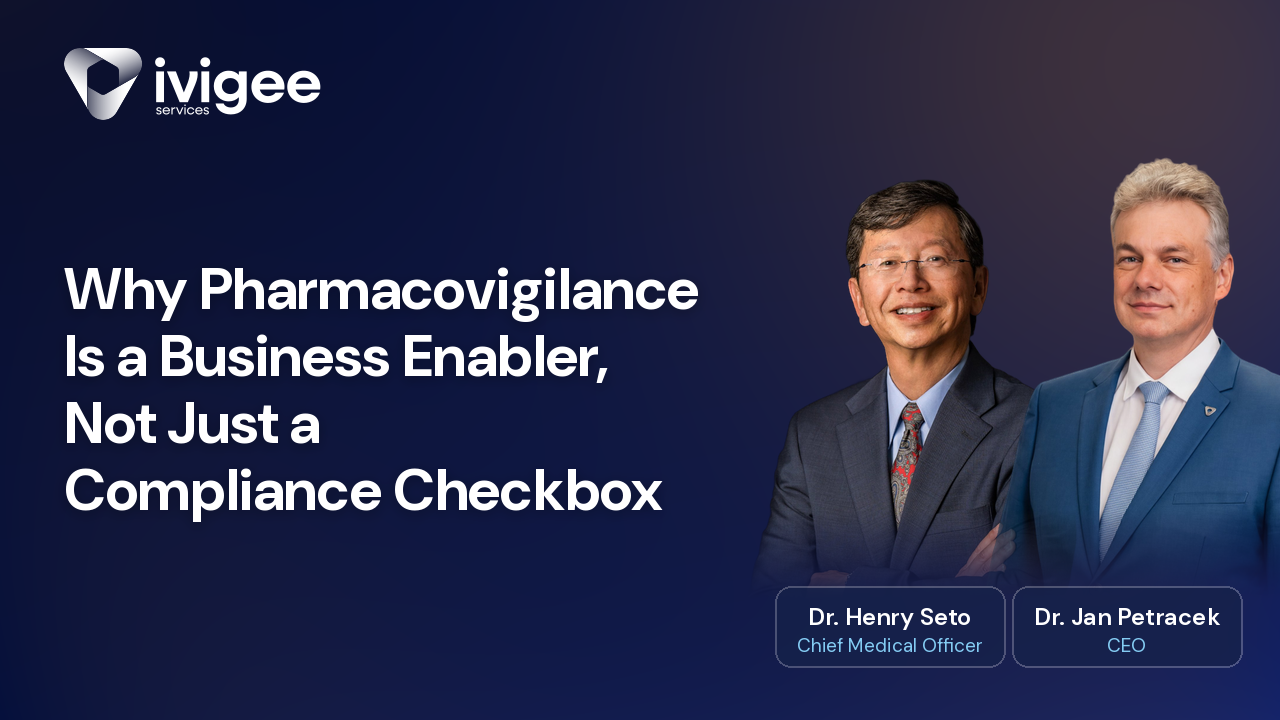
Dr. Henry Seto, our Chief Medical Officer, and Dr. Jan Petracek, our Chief Executive Officer, look at the problem from both sides: the regulator who writes the guidelines and the industry team that has to apply them.
Even the author of a guideline can’t settle what it means
Regulators work hard to make guidance clear. When Jan was writing legislation and guidelines, the process included seminars, discussions with industry associations, and public consultations, all designed to fine-tune the wording so interpretation and implementation would be straightforward. Even so, he has seen carefully worded sentences read many different ways.
His own example is hard to argue with. Jan was lead author of guidelines when he headed the risk management section at the European Medicines Agency. Later, he had to meet regulators and defend the original meaning of his own wording, because new assessors were reading it a completely different way.
Asking the regulator directly doesn’t always settle it either. When Jan headed the pharmacovigilance department in the Czech Republic, around 10 to 12 people in his department answered questions from industry, and the consistency between their answers was not great. Ask five regulators, he says, and you may get eight answers.
Why two experts disagree about 80% of the time
iVigee saw the same pattern when building its own internal systems. Using two experts per country to interpret the very same legislation, the team expected them to differ on 20 to 30% of questions. It was closer to 80%.
Part of the reason is translation. Many regulations are written in a native language and then translated into English, and nuance gets lost along the way. Part of it is the regulations themselves. Even written with the best intentions, they are often somewhat vague, and there’s a gap between the letter of the law, its spirit, how industry actually practices it, and the science. Once you’ve settled on an interpretation, you still have to apply it to your own product and its safety profile.
Why AI can’t give you the answer
It’s tempting to think AI could settle this. The problem is that much local interpretation is unpublished. It lives in the heads of experienced people. Where several versions of an opinion are published, AI has no reliable way to decide which interpretation is correct, and it can get it wrong or even hallucinate.
For more on where AI can and can’t be trusted, read Can You Trust AI With Pharmacovigilance?
Why a trusted community matters
Pharmacovigilance professionals have long tried to compare notes through industry groups, heads of safety groups, and meetings. The CIOMS reports even publish surveys showing what share of companies handle a question one way or another. Henry says that as a head of safety, he preferred not to be in the 5% doing something different, because it’s hard to defend.
Social media hasn’t filled the gap. LinkedIn and Reddit groups exist, but you don’t know who you’re talking to, whether to trust them, or how your information will be used. What’s needed is a trusted professional community where people know they’re among peers. That kind of feedback loop could even help regulators see where guidance is confusing and improve it next time around.
How to reach a defensible interpretation
So how should you approach pharmacovigilance regulatory interpretation when there isn’t one clear answer to look up?
Build an interpretation you can defend. Where the rules are clear, you can get to the answer. Where they aren’t, the best you can do is gather multiple informed opinions and reach the best approximation of the truth. That takes experienced people and real effort, and the effort matters. You need to be able to show regulators that you worked hard to get it right, not that you took a guess. It also shows you take the regulations seriously and want to do the right thing for patients.
In an earlier conversation, Jan sat down with Alexandra Constantinescu, our Head of PV Intelligence, to talk about what regulatory intelligence built for pharmacovigilance really takes. Read it here: Is your regulatory intelligence actually built for pharmacovigilance?
Getting to a defensible interpretation, market by market
As Jan explains in the video, iVigee works with a network of experts worldwide to provide local interpretation of pharmacovigilance legislation, much of which isn’t published anywhere. That’s the foundation of our Pharmacovigilance Regulatory Intelligence. Led by Alexandra, the team monitors regulatory developments across markets and turns them into practical guidance, delivered through iViReg, which brings your requirements, status, and actions across every market into one place.
Have a PV challenge or question?