


Not software: a consultancy. We help you build your own AI-enabled PV system, tailored to your people and processes, so your team develops the AI literacy it will need for the future.
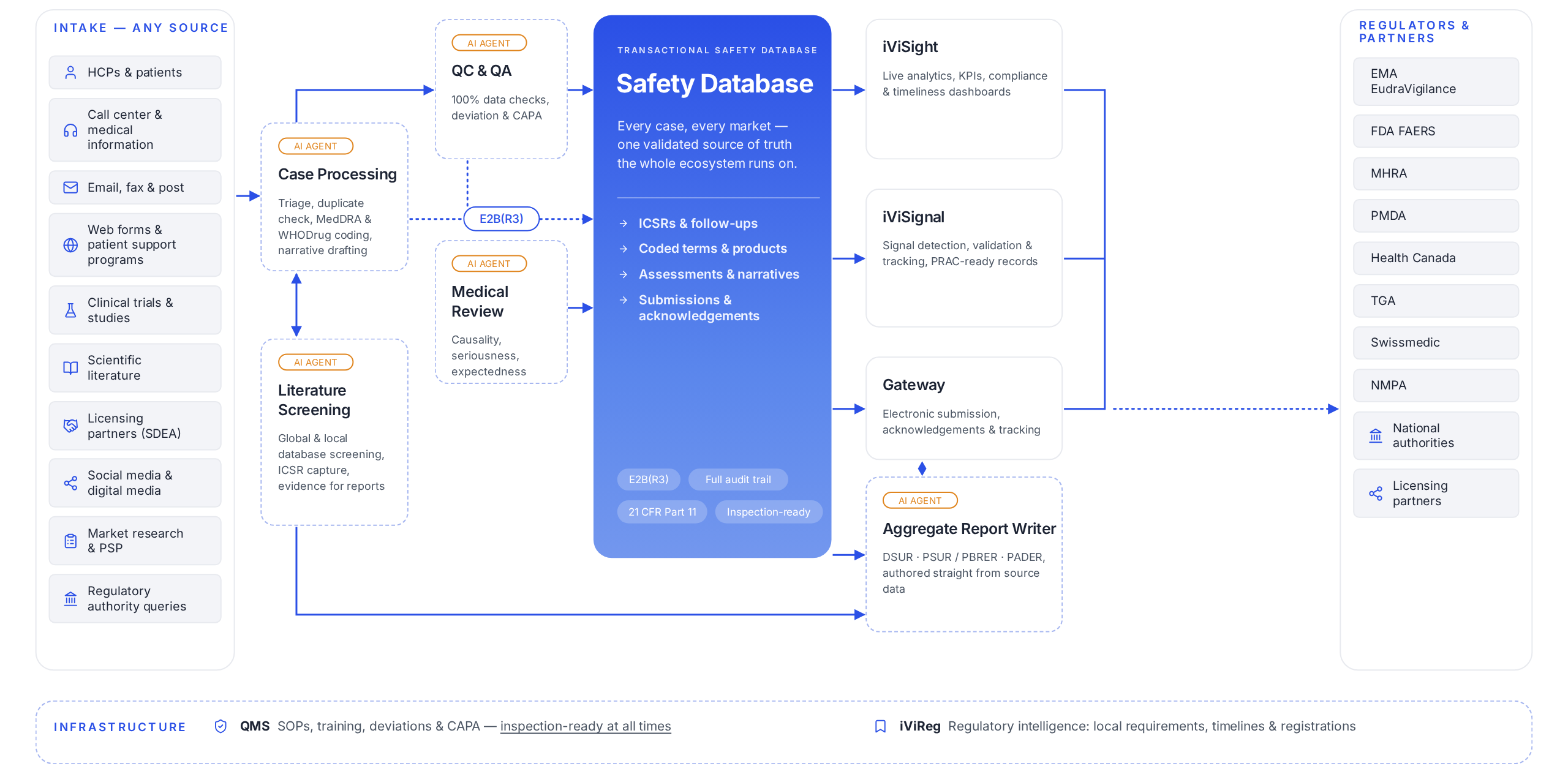
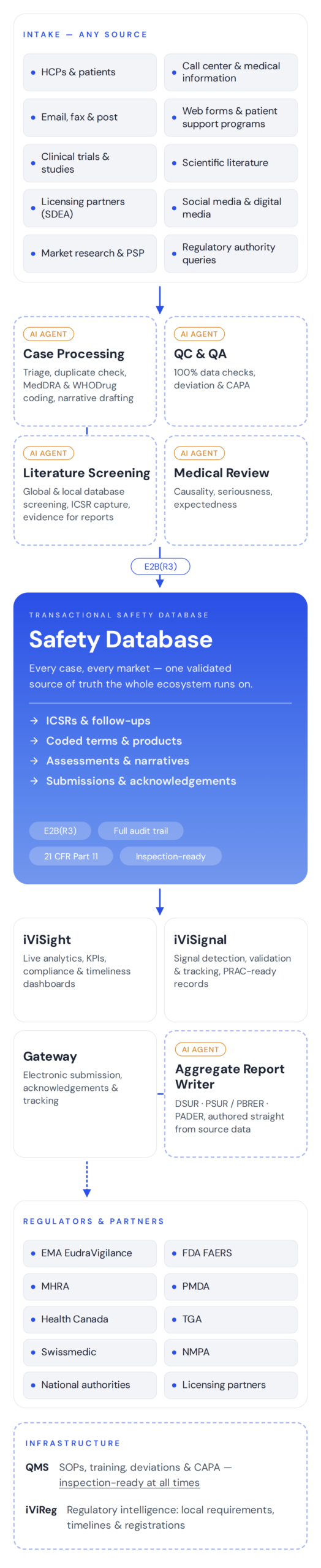


The use of AI, from machine learning to autonomous agents, to perform or support PV work: case intake and triage, duplicate detection, MedDRA coding, narrative drafting, literature screening, signal detection and reporting. In an agentic department, these agents operate inside the quality system under defined human oversight, not as external tools.
No. It changes what they do. Agents absorb high-volume routine work; qualified humans keep authority over causality, signal validation, expedited submissions and labelling decisions. Accountability stays with named people: the autonomy of each workflow is a configuration choice, never a default.
Yes, when it is built the way regulators describe: risk-based credibility assessment per context of use (FDA draft guidance), MAH responsibility for validating and monitoring AI (EMA reflection paper), and meaningful human oversight (CIOMS WG XIV). See how we validate and govern AI in PV. →
Intake, duplicate detection and data extraction automate well - across any channel, including reports from patients, social media or literature. Medical judgement, causality and seriousness assessment need a human with accountability.
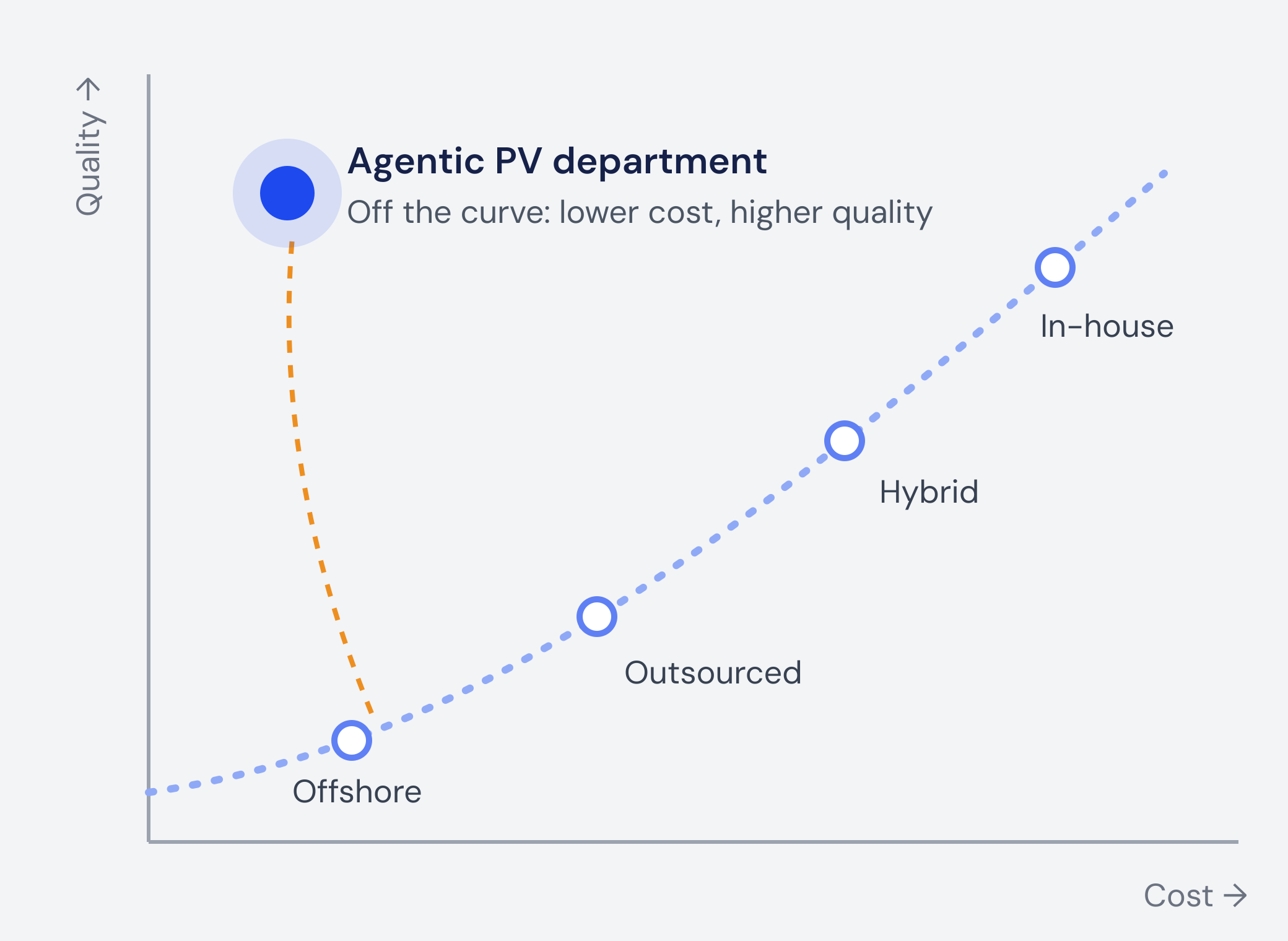
Costs fall significantly compared with even the lowest-cost delivery locations, because the saving is structural: agents absorb volume that previously required headcount, not labour-rate arbitrage.

Hvezdova 1716/2b, 140 00 Prague 4, Czech Republic
1500 District Avenue, Burlington, MA, United States