There’s plenty of excitement around AI in pharmacovigilance, but adopting AI is only part of the equation. The real test is whether its outputs can stand up to regulatory scrutiny.
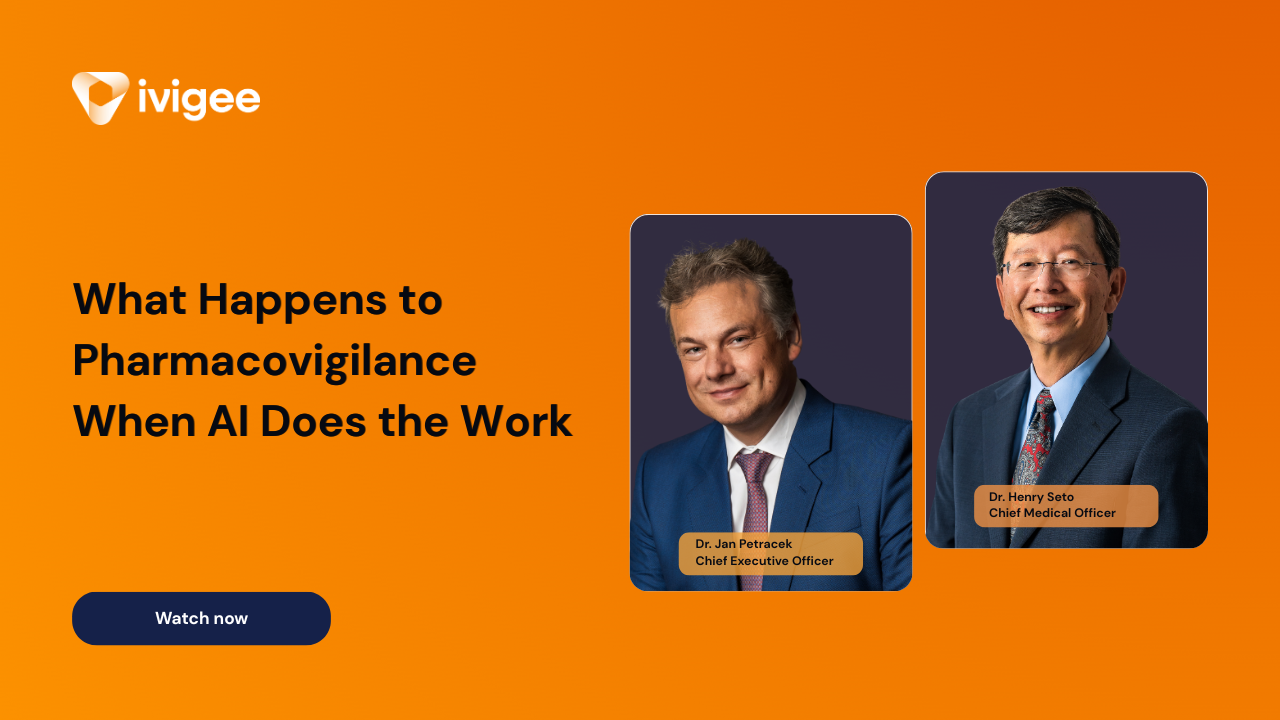
Dr. Jan Petracek explores this with Matthew Smith, our Senior Commercial Officer. Jan’s starting point may come as a surprise: regulators are not the obstacle. With limited resources and every product on the market to monitor, regulators need AI too. Jan also sees the CIOMS XIV guidance as open-minded, with two core principles at its heart: credibility and risk management.
The real challenge lies in putting those principles into practice. Jan argues that AI validation cannot be an afterthought once an agent has been built. It needs to start with the development plan from the outset, ensuring that every change and every behavior the agent exhibits is documented, traceable, and managed through a risk register. A single layer of protection is not enough, either. Some guardrails work as intended, while others may be ignored by the agents themselves. That’s why redundancy is essential.
The conversation then turns to the practical questions facing PV teams. Do you need to replace your existing systems? Jan’s answer is no. He recommends keeping a validated safety database and a document management system as the foundation, protecting data integrity while modernizing the surrounding systems step by step. How long does the process take? For a smaller organization, it could be just a few months; for the largest, around two years. And what is the biggest challenge? It’s not the technology, but people’s willingness to learn and adapt.
If you’re being asked to introduce AI into your safety operations but aren’t yet sure how you would explain your approach to an inspector, this is a good place to start.
Considering AI for your safety operations? Discover how we approach AI in pharmacovigilance.





Hvezdova 1716/2b, 140 00 Prague 4, Czech Republic
1500 District Avenue, Burlington, MA, United States