Most companies plan market access first and find out what pharmacovigilance demands afterward. That’s how a drug safety team ends up with a Friday task to sort out access to ten new countries by Monday.
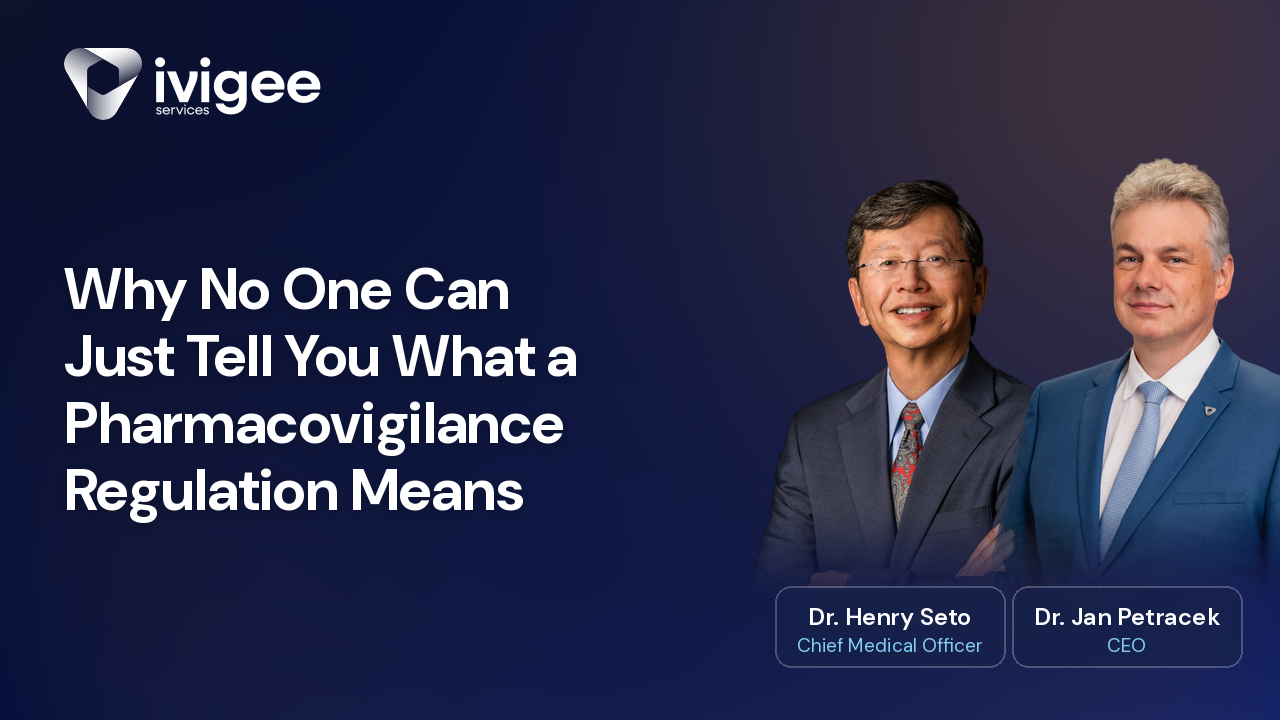
Dr. Jan Petracek, our Founder and Chief Executive Officer, and Dr. Henry Seto, our Chief Medical Officer, who spent 14 years leading global patient safety in industry, make the case that pharmacovigilance is a business enabler, not a box to tick at the end.
Why pharmacovigilance gets left until last
Deciding how to run pharmacovigilance across markets is not easy. You might use a distributed or centralized model, co-marketing or co-licensing arrangements, or trusted distributors. Yet decision-makers often look at the question from a single angle: getting a product available in a particular country, or running a trial there.
They think first about market conditions, market access, distribution channels, and logistics. Pharmacovigilance comes last, or close to it. The problem is that without proper pharmacovigilance, you can’t really sell.
The cost of deciding blind
When the safety and regulatory requirements aren’t mapped up front, companies make the decision first and only then find out what it takes. The example from the conversation is simple. You want to sell in Ghana, but it will cost this much and require this and that. Maybe you need to be selling next week, and the six months it will actually take won’t work. If you’d known that before deciding, you might have decided differently.
The people in drug safety management roles feel this most. Pharmacovigilance arrives at the end of the process, and suddenly they’re asked on a Friday to sort out access to ten new countries by Monday.
Don’t be the rate-limiting factor
Henry shares something he often said in his former role: you never want to be the rate-limiting factor, and to avoid it, you need to plan with good information. Safety information is no different from your financial information or any other information you need to run a business.
People tend to think of safety as a compliance checkbox. In fact, it’s business critical in drug development and in getting your products to market and to patients. Safety should not be an afterthought. Planned early, it actively helps you make better business decisions.
The stakes are rising
Pharmacovigilance also can’t be one size fits all. Patient organizations have a different say from country to country, in reimbursement, in how safety and the benefit-risk profile are perceived, and in how well patients follow treatment across different cultures. You can’t give patients the same information the same way everywhere.
Inspections are changing too. Pharmacovigilance inspections used to be run mainly by a few of the most influential regulatory agencies. Now even the smallest regulatory authorities perform pharmacovigilance inspections, and they often want people from the local affiliate and headquarters to attend and answer questions.
All of this adds cost and complexity. Teams are being asked to handle far more work, by some estimates five times more, without adding headcount. That’s why Jan and Henry point to the need for tools that don’t just make the work more efficient but make it better. Without a proper system and the right IT support, a great deal of time, effort, and money gets wasted.
Plan pharmacovigilance in from the start
Treat pharmacovigilance as a last-minute step and it becomes the bottleneck. Plan for it early, with good information, and it becomes part of how you get to market. The full conversation is in the video above.
This is the second of two conversations with Jan and Henry. The first, Why No One Can Just Tell You What a Pharmacovigilance Regulation Means, looks at why the rules themselves are so hard to pin down.
Know the requirements before you commit
Mapping pharmacovigilance requirements before you decide is what our Pharmacovigilance Regulatory Intelligence service is for. Through iViReg, you can see country requirements, impact assessments, and commitment tracking across your markets in one place, so the cost and timeline surprises show up before the decision, not after. For a closer look at how that work is done, read Jan’s conversation with Alexandra Constantinescu, our Head of PV Intelligence: Is your regulatory intelligence actually built for pharmacovigilance?
Want to talk it through? Put your question to a pharmacovigilance expert: